Public and political discussions about Ukraine’s path to European Union membership are currently dominated by the realities of Russia’s aggression and the urgent security, financial, and institutional decisions it entails.
Against this backdrop, debates often oscillate between two opposing narratives. On the one hand, there is a vision of an almost inevitable and glorious European future for Ukraine, driven by solidarity, moral obligation, and geopolitical necessity. On the other hand, sceptics — both inside and outside the EU — warn of high costs, institutional overstretch, and political risks associated with further enlargement.
What tends to be overlooked in this polarised debate are the many shades of grey in between. These less visible, often uncomfortable issues rarely feature prominently in official roadmaps, reform scorecards, or political declarations; yet, they may ultimately determine not only the speed of Ukraine’s EU integration but also its quality and sustainability. While timelines, benchmarks, and legislative alignment are essential, they are far from sufficient to ensure successful accession.
This article argues that Ukraine’s European future will be shaped at least as much by structural, demographic, social, and governance-related challenges as by formal compliance with EU acquis. I’m not talking about “overcoming” these challenges since many of them, including demographic ones, are imminent to the EU member states too. I’m talking about having institutional and fiscal capacity to systematically govern these challenges: to have policies, budgets and administrative mechanisms that would allow the state to function under the conditions of permanent pressure and implement the EU integration conditions in the long run.
Time is undoubtedly of the essence, particularly for security reasons. However, the quality of reforms and their acceptance across society require equal attention. Without this, from the central government to the most remote local communities, and from public administration to private economic actors, making decisions needed for the EU integration would be much more difficult and politically more risky, and their implementation less sustainable. This particularly relates to decisions on redistribution of powers and finance between levels of government, regulatory changes for businesses, public service reforms, and implementation of the EU sectoral standards.
Ukraine needs a national European integration strategy which would not only draft an algorithm of adjusting the national legislation to the EU norms but also incorporate a wider consensus view of expected socio-economic and managerial changes, and could become an important foundation for institutional transformations. Today Ukraine does not have such a strategic document: a draft National program for adaptation of legislation to the EU acquis approved at the end of 2025 is an important technical step but it avoids the hardest topics: how EU norms would change the actual work of public agencies, which industries the government is ready to support and which not, and how to redistribute responsibility between the central government and communities.
Certainly, having this strategy per se does not guarantee anything. Its success depends not only on political decisions but also on people who would operationalize this strategy and implement it. This requires specialists who understand how the EU integration really works: from the logic of expansion to everyday procedures and work culture of EU institutions.
Poland, for example, at an early stage in 1996 established its Office of the Committee for European Integration staffed with professionals many of whom had received training or practical experience within EU institutions. An important element of this model was the formation of a pool of lawyers who could rigorously prepare national legislation for transposition of the EU law. In 2002 Poland introduced a special training program for about two thousand specialists, some of whom studied in Brussels. This strengthened not only Poland’s negotiation position but also its ability to align legislation with the EU norms. Croatia employed a similar approach.
Ukraine has formally created a high-level government coordination centre — it introduced the position of Vice-Prime-Minister on EU and NATO integration, and there are respective deputy ministers in line ministries. At the same time, previous accession experience suggests that the main factor is not only having this position but systemic improvement of EU integration capacity within the entire public service system. Estonia offers another instructive case: long before accession, it invested heavily in modernising public administration and digital governance, which later enabled effective implementation of EU rules not only at central level, but across the entire public sector.
By contrast, shortages of experts with in-depth knowledge of EU law and administrative procedures slowed negotiations and complicated implementation in countries such as Romania and Bulgaria.
This is why investment in education and training on European integration is not a secondary issue, but a strategic one. Without a broader community of people with hands-on knowledge of the EU — in public administration, academia, and civil society — even the best-designed national strategy will struggle to deliver results.
EU Enlargement as Neither Heaven nor Hell
EU enlargement is frequently perceived in an overly simplified way. Candidate countries often view accession as a near-magical solution to structural problems. By contrast, in the EU it is sometimes portrayed as a source of almost unmanageable risks. In reality, enlargement is a complex and lengthy process that requires adaptation to a system of values, rules, and practices covering nearly all areas of life.
Although the EU has a clear enlargement methodology, updated in 2020, real success depends on the internal dynamics of transformation within a candidate country. Therefore, Ukraine’s path to the EU should not be reduced to a purely technical process handled only by the central authorities. Broader stakeholder groups must be involved in defining the goals and priorities of transformation.
Past enlargements demonstrate that a checklist approach, focused primarily on passing legislation, is insufficient. A check-list can create an illusion of progress but it does not guarantee real changes. For the EU real changes are not the number of adopted laws but whether they change the behaviour of public institutions, businesses and citizens, and whether these changes sustain the political pressure in the long run. Equally important is to explain policy decisions to citizens, to address critique and create a space for public debate, e.g. using the instrument of public consultations. This becomes particularly relevant when Ukraine confronts sensitive questions such as the distribution of powers and financial resources among central, regional, and local levels of government. Competing visions and interests are inevitable; they should neither be suppressed nor allowed to cause indefinite delays.
Romania’s experience is particularly instructive. The country had a national EU integration strategy that was formally supported by all major political actors. I discuss this period in detail in my book “The Last Train West: Rethinking Romania’s Accession to the EU”. During the strategy implementation, it became clear that a formal consensus was not enough. Slow implementation of commitments agreed with the European Commission, combined with prolonged political disputes over the direction and pace of reforms, meant that even agreed steps often stalled. Romania’s former chief negotiator with the EU, Vasile Pușcaș, once described this phase to me as “lost years,” when the push for speed came at the expense of reform quality. Similar concerns are already being voiced in Ukraine today.
It is also important to realistically assess the EU’s readiness for change. The Union is unlikely to undergo a radical overhaul solely for admission of Ukraine. This does not contradict calls for internal EU reform; rather, it reflects the reality that the greater burden of adaptation inevitably falls on the candidate country.
For its part, the EU is prepared to support these transformations with instruments of technical and financial assistance. However, the experience of previous enlargements shows that treating financial support as the primary or sole motivation for membership is problematic. In Romania’s case, as in other countries, promises of substantial financial flows often dominated political discourse, while less attractive aspects of membership, such as opening the internal market, raising environmental and consumer standards, and increasing regulatory requirements, remained on the side. However, these elements later generate the greatest resistance when the benefits of financial programs become less tangible or conditional.
Demographic Loss as a Structural Challenge
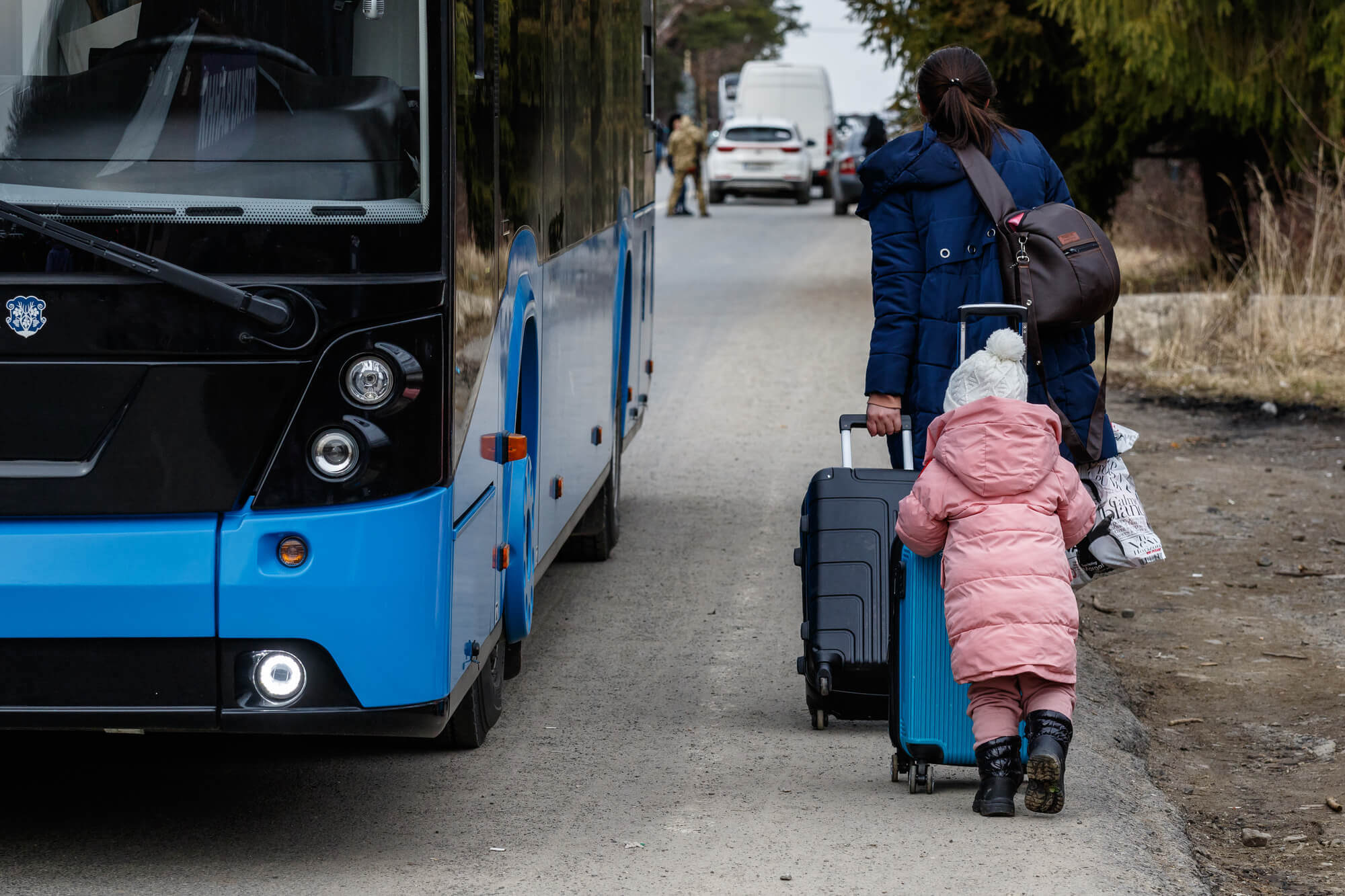
Demographic decline represents another critical yet under-discussed challenge for Ukraine’s EU integration. While the war has dramatically accelerated population loss, this trend cannot be attributed solely to ongoing hostilities. As of today, millions of Ukrainians — primarily women and children — have sought refuge abroad. Recent studies, including those conducted in Germany, suggest that a significant share of them do not plan to return in the foreseeable future.
This phenomenon is not unique to Ukraine. All countries that joined the EU in the 2004 enlargement experienced substantial emigration, often involving younger and highly skilled individuals. The consequences for labour markets, social security systems, and public administration were profound and long-lasting. Ukraine risks facing a similar, if not more severe, scenario.
The paradox is that countries undergoing deep transformation are most likely to lose precisely the minds and hands they need to implement reforms. Administrative capacity may be weakened, and the ability to design, execute, and monitor EU-related policies could suffer. These effects are not limited to the private sector; they also directly affect the state’s capacity to absorb EU funds and comply with complex regulatory frameworks.
An early, honest assessment of demographic trends — and an open debate on mitigation strategies — is therefore essential. Policies aimed at encouraging return migration, maintaining ties with the diaspora, or attracting new talent should be discussed sooner rather than later. Ignoring these structural realities would risk undermining the very reforms Ukraine is expected to deliver.
Reconstruction and EU Integration as Parallel Processes
Ukraine faces a unique challenge which other EU candidate countries have not faced: its EU integration will unfold in parallel with a large-scale reconstruction effort. In previous enlargements, e.g. in the case of Croatia, reconstruction and integration were largely sequential processes. In Ukraine’s case, they will overlap, placing unprecedented strain on institutions and decision-makers.
Experience shows that EU integration does not end on the day of accession. Many transformative elements, particularly those that require changes in administrative culture and societal attitudes, take years or even decades to implement. Even under favourable conditions, the process often generates frustration: reforms seem too slow, benefits are unevenly distributed, and unintended inequalities emerge.
Reconstruction adds another layer of complexity. Decisions about priorities — who receives funding first, which regions or sectors are favoured — are inherently political and potentially divisive. Historical examples illustrate the risks. After German reunification, ambitious promises of “blossoming landscapes” in the eastern Länder failed to materialise as expected, leaving long-term economic and social scars.
In Ukraine, foreign investors may prioritise short-term opportunities over long-term sustainability for regions and communities. Poorly designed projects can create negative knock-on effects and lasting budgetary burdens. Robust control mechanisms, transparency, and the involvement of civil society are therefore essential to minimise such risks.
Building institutional capacity, especially at the local level, can help reduce this pressure. City partnerships and similar initiatives have already shown their value. One example is Cities4Cities, inspired by the experience of cities in Central and Eastern Europe. The initiative connects Ukrainian municipalities with partners abroad, mainly in Sweden, Germany, Poland, and France, and helps them build long-term cooperation.
At the same time, experience also shows that an overload of uncoordinated donor programmes and recommendations can make local work more difficult rather than easier. Clear frameworks and a focus on approaches that have already proven effective are therefore essential.
War Veterans, Trauma, and Less Visible Social Consequences
One of the most sensitive and under-discussed challenges facing Ukraine concerns the long-term social consequences of war, particularly the reintegration of veterans into civilian life. Visits to major institutions supporting war veterans reveal both impressive dedication and alarming capacity constraints. As long as Russia’s aggression continues, the number of affected individuals will keep rising.
Beyond institutional limitations lies a broader societal challenge. Social workers emphasise that communities need far more support to genuinely accept and integrate returning veterans. Public expressions of gratitude are important, but daily practice often falls short of expectations. Silence and discomfort can be deeply alienating for those who have served.
Veterans are also widely expected to play a significant role in Ukraine’s post-war political landscape, with unpredictable implications. This adds yet another layer to the already complex web of competing interests and priorities in the country’s transformation process.
War-related trauma also has indirect social consequences that receive insufficient attention, including rising domestic violence. Other societies, notably the United States after the Vietnam War, struggled for decades to address such issues — with mixed success. Ukraine faces the difficult question of whether it can improve its response by anticipating these challenges, developing comprehensive strategies, and providing adequate support for affected families. These are emotionally charged topics, but avoiding them would be a serious mistake.
These issues are not secondary to European integration. The question is not how Ukrainian veterans or social problems will be perceived in Europe. It is about the state’s ability to deal with sensitive issues at home: to set priorities, explain difficult decisions, and prevent social tensions from building up. In enlargement processes, it is often these less visible factors that shape trust in reforms, the resilience of institutions, and society’s willingness to support a long and demanding path of transformation.
Conclusion
Less visible challenges discussed above—governance trade-offs, demographic losses, the need to combine reconstruction with integration, and the social consequences of the war—may prove decisive for Ukraine’s European integration in the coming years. In particular, the growing number of veterans and the scale of psychological trauma will directly affect political stability, the functioning of the labor market, and the state’s capacity to ensure compliance with new regulatory and social obligations. If these issues remain on the margins of political debate, the country risks facing not only reform fatigue and a decline in trust, but also a chronic capacity deficit—from the effective reintegration of veterans into civilian life to maintaining the manageability of the political process, which ultimately determines the pace of negotiations and the quality of implementation.
This is why Ukraine needs a nationwide strategy — but not one that exists only on paper or relies solely on political agreement at the top. What really matters is whether there are enough people who can turn strategy into everyday work. Past enlargements show a simple lesson: countries moved faster when they had people who knew how EU integration works in practice, and when this knowledge was spread beyond the centre to ministries, agencies, regions, and local administrations.
In practical terms, this means investing in people. Ukraine needs specialists in EU law and negotiations; teams that can translate EU rules into national legislation; professionals who understand market access, competition, and sectoral policies, including agriculture and the common agricultural policy; people who can manage EU funds; and diplomats and communicators with strong language skills. Just as importantly, this expertise must reach the lower levels of public administration, where EU rules are implemented day by day.
As part of this broader effort, I see my own contribution in the certificate programme “European Integration” at the Ukrainian Catholic University, which will be implemented in 2026 with the support of the Heinrich Böll Foundation, Kyiv–Ukraine Bureau. We have opened registration for Ukrainians who want to better understand how the EU actually works, what membership really involves, and which challenges — beyond formal checklists — will shape Ukraine’s pace and results.
Defining priorities and consistently implementing them is a challenging but entirely achievable task. Critical voices are inevitable— they should be heard, without allowing them to halt the entire process. Ukraine’s path to the EU is unlikely to be smooth or fast, but it can be manageable if the substance of reforms is supported by institutional capacity and public trust.
Photo: depositphotos.com
Attention
The author doesn`t work for, consult to, own shares in or receive funding from any company or organization that would benefit from this article, and have no relevant affiliations