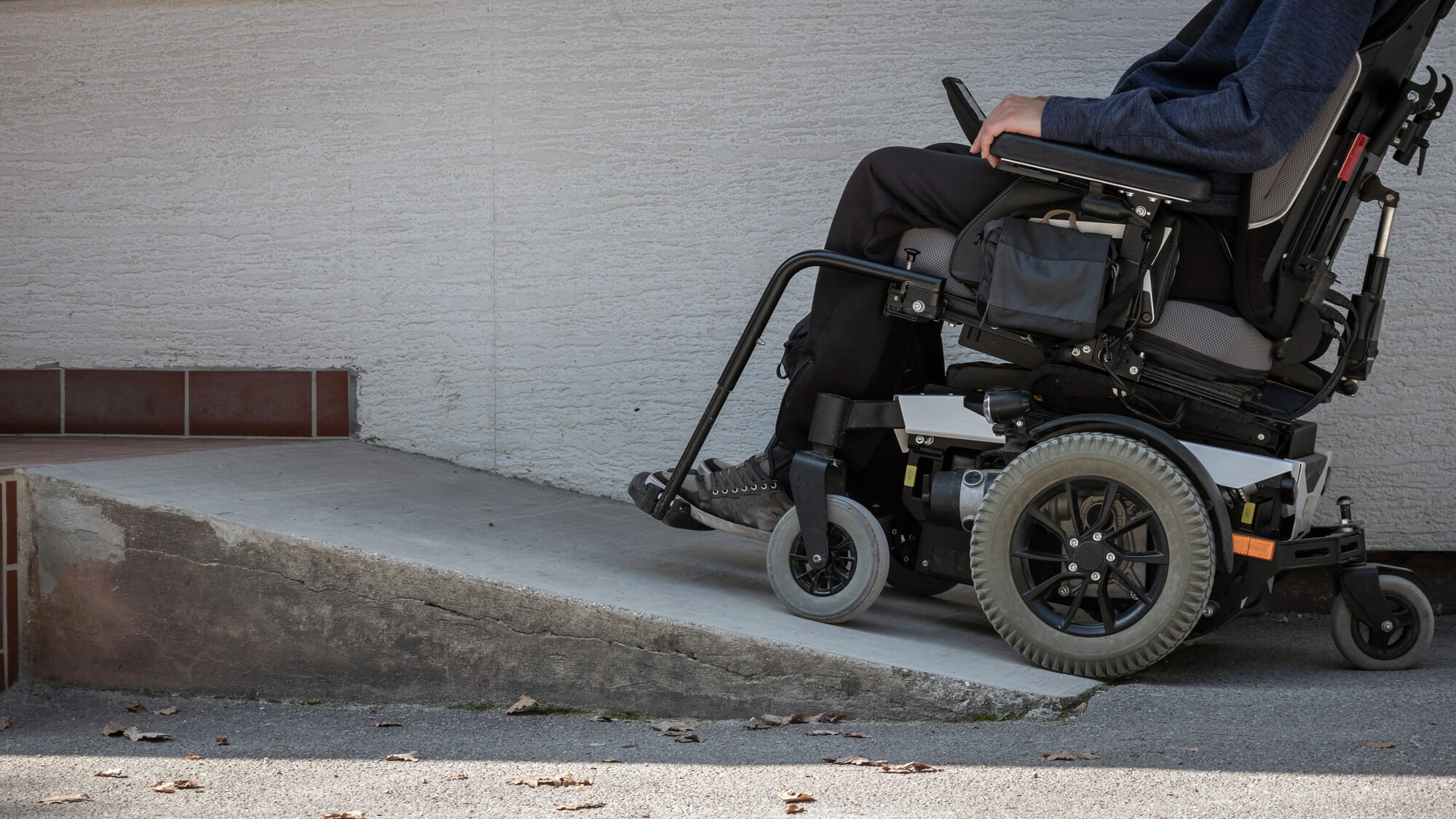
Between November 24 and December 7, 38 draft laws were registered in the Verkhovna Rada: one presidential, nine governmental, and 28 submitted by MPs. One of the bills proposes introducing new rules for state websites, registers, and online services, as well as for specific services of private companies (such as communications, transportation, or banking services), ensuring that they are accessible to everyone, including persons with disabilities. MPs propose capping the salaries of civil servants and managers of state-owned enterprises at UAH 80,000. In addition, a change is proposed to the procedure for paying a one-time benefit to children whose parents died due to hostilities, to determine when the funds would be paid immediately and when they would be paid upon reaching adulthood or the age of 21.
New law on the accessibility of electronic services in Ukraine
Bill No. 14278 proposes updating the rules on digital accessibility. A new standard would be developed by the Ministry of Digital Transformation. The bill would apply primarily to the digital resources and electronic services of state authorities and local self-government bodies, as well as to state registers and systems. It would also affect certain private companies that provide online services in sectors defined by law, including transportation services, energy, postal services, financial services, online commerce, healthcare, culture, gambling, and others. The bill concerns only new products and services — it would not require reworking videos or audio published before the law takes effect, would not apply to live broadcasts (except in cases of emergency population alerts), and would not cover certain third-party content that an agency does not create or control.
According to the bill, a website, mobile application, electronic service, or online service would need to operate in a way that allows everyone to use it, including persons with disabilities and those with temporary limitations — for example, individuals who have difficulty reading small text, cannot use a mouse, or require assistive technologies. The requirements concern not only user-friendly design but also the accessibility of information for different people using different devices. Today, many online services lack basic accessibility elements — a quick option to skip to the main content, visible focus indicators for keyboard navigation, sufficient text contrast, and clear labels for hyperlinks — which makes them difficult to use for people with visual or motor impairments.
The draft law would link digital accessibility requirements to a national standard to be developed and published by the Ministry of Digital Transformation. To ensure that users understand whether an online resource complies with accessibility rules, its owner must publish an accessibility statement indicating which requirements have been met, which have not, the reasons for any noncompliance, and contact information for submitting requests in case of accessibility problems.
Higher fines for violations during film distribution
Currently, screening and distributing films are allowed only if a special state certificate is obtained. For screening or selling films, producing film copies, or failing to comply with the quota for showing national films without such a certificate, fines range from several hundred to 2,500 hryvnias, along with confiscation of the copies and any proceeds. For repeated violations within a year, the fines increase.
Bill No. 14275 proposes replacing the system of state certificates with a check to ensure that films are entered in the State Film Register, and it would significantly increase fines, ranging from UAH 17,000 to UAH 51,000. The bill would remove the provision establishing liability for producing film copies without a certificate of authorisation.
NABU would be able to investigate corruption in the President’s Office
Currently, the Criminal Procedure Code prohibits the Prosecutor General from initiating an investigation that falls under NABU’s jurisdiction (cases involving the receipt or offering of an unlawful benefit, abuse of power or official position, illicit enrichment, or the misappropriation or embezzlement of property, if the suspicion concerns a Member of Parliament, the Prime Minister, a member of the Cabinet of Ministers, a deputy minister, the head of the NBU, or a member of the Central Election Commission). An exception applies during martial law: if objective circumstances prevent NABU from operating or conducting an investigation, the Deputy Prosecutor General — the Head of SAPO — or the Prosecutor General may assign the investigation to another body. At the same time, as noted in the accompanying documents, disputed situations arise in practice, particularly when, after the offence is committed, an official changes positions and the parties interpret differently regarding which body should continue the proceedings.
Bill No. 14269 would supplement the current prohibition on the Prosecutor General initiating investigations in NABU cases with a ban on transferring such cases. If an investigation is initiated by a NABU detective or a SAPO prosecutor, and at the time of issuing a notice of suspicion it is clear from the collected materials that the case falls under NABU’s jurisdiction, such a case could not be taken away from NABU and handed over to another body (except for the previously mentioned wartime exception involving NABU’s objective inability to operate).
Separately, the bill clarifies which officials it would classify as those with respect to whom NABU would investigate specified corruption offences. Currently, the Criminal Procedure Code restricts NABU’s jurisdiction to a list of the highest state positions. The draft law would expand this list to include the head of a permanent auxiliary body established by the President of Ukraine (for example, the Office of the President), their deputy, and the heads and deputy heads of advisory, consultative, and other auxiliary bodies or services created by the President of Ukraine.
Cap of UAH 80,000 on monthly remuneration in the public sector during martial law
Bill No. 14247 proposes introducing a single maximum monthly remuneration level in the public sector for the period of martial law and until the end of the calendar year in which it is lifted. The limit would equal 10 minimum wages as of the first day of the relevant month (currently UAH 80,000). The limit would not include temporary disability benefits, health recovery assistance, annual leave pay, or legally mandated allowances and supplements (for example, seniority or grade-related bonuses for civil servants).
For state-owned enterprises and companies with state participation (50% + 1), such as Ukrzaliznytsia, Ukrposhta, and Naftogaz of Ukraine, the restriction would apply not to all employees but only to executives, their deputies, and members of the management and supervisory boards. Currently, the salaries of top executives in state-owned companies may be several times higher than those in the public sector and, in some cases, reach hundreds of thousands or even millions of hryvnias per month. For state-owned enterprises, the bill would permit bonuses and other incentive payments exceeding the limit, provided that they are based on performance results and the enterprise is profitable. The total amount of such fees may not exceed 20% of the taxes paid by the enterprise in the previous reporting period. The government would approve the procedure for calculating and determining bonus amounts.
For state bodies and the budget sector, the bill would set the same cap — UAH 80,000 for all categories of employees and officials: state and local authorities, courts, Members of Parliament, employees of the Accounting Chamber, the National Bank, and other employees in the budget sector (in August, the salaries of the heads of some state bodies ranged from UAH 182,000 to UAH 366,000). Bonuses would count toward the limit for this group. The restriction would also apply to employees of local self-government bodies. The bill makes an exception for specific categories of military personnel, security officers, and police officers who are directly involved in combat operations or work in areas where such operations are conducted. The Cabinet of Ministers would determine the list of positions eligible for the exception.
This bill is another manifestation of populism, and if adopted, would likely lead to a decline in the quality of public administration by driving qualified individuals out of this sector.
New rules for paying a one-time monetary benefit when the recipient is a child
Current legislation provides for a one-time monetary benefit for a child if one of the parents died while serving in the police, the civil protection service, or the military. A similar benefit is granted to children of critical-infrastructure workers and employees of state and local authorities if harm to life or health was caused by the armed aggression of Russia against Ukraine.
Currently, the benefit is assigned and paid upon application, with each eligible person applying individually. For a child or another person who cannot act independently, the application is submitted by a legal representative. If there is no “personal order” left by the deceased, the amount is divided equally among all persons entitled to this support. For a child under the age of 18, the application is generally submitted by the other parent, a guardian, a custodian, or another legal representative, and the funds are transferred to the bank account indicated in the application and opened in the name of the recipient; in practice, however, the child’s share effectively remains under the control of the legal representative.
Bill No. 14248 proposes a separate procedure for cases in which the person entitled to the benefit is a child under the age of 18. It would establish that 50% of the amount due to the child would be paid upon the child’s reaching the age of 21. If the child’s legal representative is the administration of a hospital, an educational institution, or another children’s institution that performs the functions of a guardian or custodian, no application would be submitted, and the benefit would be paid to the child in full upon the child’s 21st birthday. This payment would be adjusted for inflation for the “waiting period.” A child would be able to receive the benefit before the age of 21 in cases of serious illness, congenital developmental disorders, the need for palliative care, the establishment of disability, or a parent’s or adoptive parent’s serious illness. The bill would allow a child aged 16 to 21 to receive the funds due to them if they are needed to pay for education or to resolve housing issues (the procedure for monitoring the use of these funds would be defined by the Cabinet of Ministers).
Photo: depositphotos.com/ua

Attention
The author doesn`t work for, consult to, own shares in or receive funding from any company or organization that would benefit from this article, and have no relevant affiliations